
CATARACT
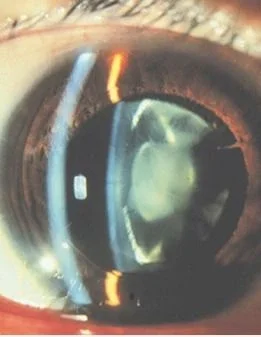
Cataracts are one of the most common causes of visual impairment worldwide and represent a natural consequence of ageing within the eye(1-3). A cataract occurs when the crystalline lens, which is normally transparent, gradually becomes clouded over time. Because the lens is responsible for focusing light onto the retina, changes to its transparency can reduce the quality of vision reaching the back of the eye, resulting in symptoms that may significantly impact daily activities, occupational performance, independence and overall quality of life(4).
Although cataracts are most commonly associated with ageing, they may also develop as a result of diabetes, prolonged corticosteroid use, ocular trauma, excessive ultraviolet exposure, smoking and certain inherited conditions(5-9). The rate at which cataracts develop varies considerably between individuals. Some cataracts progress slowly over many years, whilst others can cause noticeable visual deterioration over a relatively short period of time. The presence of cataracts means that a nuanced approach to treatment of signs and symptoms is required- in some cases, glasses, sunglasses or contact lenses will continue to provide adequate improvements to vision, but in other cases, early surgical intervention is a superior solution.
At Onèj Optometry, we recognise that every patient's visual demands are unique. Comprehensive cataract assessment involves careful evaluation of ocular health, visual function, prescription stability and the impact of symptoms upon daily activities.
-
The crystalline lens is composed of highly organised proteins and fibres that maintain its transparency and optical clarity. Throughout life, these structures undergo gradual biochemical and structural changes. As proteins within the lens become altered and accumulate, incoming light is increasingly scattered rather than transmitted clearly through the eye (9-11). This process may cause blurred vision, reduced contrast sensitivity, increased glare, difficulty driving at night, impaired colour perception and a general reduction in visual quality that cannot always be fully corrected with spectacles alone(10, 12).
Many patients assume that worsening vision simply means they require stronger glasses; however, cataracts often affect vision in ways that extend beyond visual acuity. Individuals with cataracts frequently report increased sensitivity to bright lights, difficulty recognising faces in dim environments, reduced confidence when driving at night, or a perception that colours appear faded or less vibrant than they once did. These subtle changes can develop gradually, making them difficult to recognise until they begin to affect everyday activities.
Cataracts may also alter the refractive status of the eye. Some patients experience increasing myopia (short-sightedness), whilst others notice frequent changes in their spectacle prescription. Consequently, a sudden shift in prescription does not always indicate progression of refractive error alone, and may instead reflect changes occurring within the crystalline lens itself.
Modern cataract surgery is one of the most frequently performed and successful surgical procedures worldwide(7). During surgery, the clouded natural lens is removed and replaced with a clear artificial intraocular lens. Advances in surgical techniques and lens technology have enabled excellent visual outcomes for many patients, often restoring clarity, contrast and visual comfort that have gradually been lost over time. Importantly, cataracts should not be removed according to an arbitrary level of severity; rather, treatment decisions should be based upon the extent to which visual symptoms are affecting an individual's functional needs, occupational requirements and quality of life.
At Onèj, retinal imaging and detailed examination of the eye allow any coexisting ocular conditions to be identified, allowing informed discussions regarding prognosis and management options. When cataract surgery becomes appropriate, we work closely with trusted ophthalmic surgeons to facilitate referral, communicate clinical findings, and support patients throughout the process. Early assessment and ongoing monitoring allow cataracts to be managed appropriately, ensuring that visual performance, independence and quality of life are preserved for as long as possible.
References
Zheng, Y., Yang, W., Guo, J., Chen, S., Pan, Z., & Yu, Y. (2025). Biomechanical contributions to cataract development and implications for treatment strategies. Advances in Ophthalmology Practice and Research.
American Academy of Ophthalmology. Basic and Clinical Science Course (BCSC): Lens and Cataract. San Francisco, CA: American Academy of Ophthalmology; latest edition.
Khairallah, M., Kahloun, R., Bourne, R., Limburg, H., Flaxman, S. R., Jonas, J. B., ... & Vision Loss Expert Group of the Global Burden of Disease Study. (2015). Number of people blind or visually impaired by cataract worldwide and in world regions, 1990 to 2010. Investigative ophthalmology & visual science, 56(11), 6762-6769.
Vision Loss Expert Group of the Global Burden of Disease Study. (2024). Global estimates on the number of people blind or visually impaired by cataract: a meta-analysis from 2000 to 2020. Eye, 38(11), 2156.
World Health Organization. World Report on Vision. Geneva: World Health Organization; 2019. Available at: https://www.who.int/publications/i/item/world-report-on-vision
Asbell PA, Dualan I, Mindel J, Brocks D, Ahmad M, Epstein S. Age-related cataract. The Lancet. 2005;365(9459):599–609. doi:10.1016/S0140-6736(05)17911-2
National Eye Institute. Cataracts. National Institutes of Health. Available at: https://www.nei.nih.gov
Nordström, M., Zetterberg, M., Torén, K., Schiöler, L., & Holm, M. (2025). The more smoking the more cataract: A study on smoking, snus use and cataract in a Swedish population. Acta Ophthalmologica, 103(1), 77-84.
Skalka, H. W., & Prchal, J. T. (1980). Effect of corticosteroids on cataract formation. Archives of Ophthalmology, 98(10), 1773-1777.
Chen, S. P., Woreta, F., & Chang, D. F. (2025). Cataracts: a review. Jama, 333(23), 2093-2103.
Zheng, Y., Yang, W., Guo, J., Chen, S., Pan, Z., & Yu, Y. (2025). Biomechanical contributions to cataract development and implications for treatment strategies. Advances in Ophthalmology Practice and Research.
Vingopoulos, F., Kasetty, M., Garg, I., Silverman, R. F., Katz, R., Vasan, R. A., ... & Miller, J. B. (2022). Active learning to characterize the full contrast sensitivity function in cataracts. Clinical Ophthalmology (Auckland, NZ), 16, 3109.
Kanski JJ, Bowling B. Kanski's Clinical Ophthalmology: A Systematic Approach. 9th ed. Elsevier; 2020.
Royal College of Ophthalmologists. Cataract Surgery Guidelines. London: The Royal College of Ophthalmologists; latest edition. Available at: https://www.rcophth.ac.uk