
DIABETIC EYE EXAMINATION
Diabetes, when appropriately managed and treated, can have little to no effect on the eyes and vision. However, longer duration of living with the disease, and suboptimal control of blood glucose, cholesterol levels or blood pressure are risk factors that can contribute to diabetic eye disease(1-3). Regular eye examinations (involving dilation of the pupils and retinal scans) and early treatment of eye disease, are imperative to preserving vision(4). Take care of your eyes by arranging a diabetic eye exam at Onèj Optometry
-
Diabetic retinopathy, in which damage to the vascular health of the retina can result in irreversible impairment to vision, is one of the leading causes of blindness in the working age cohort worldwide(5). Changes to the retinal vasculature in diabetic retinopathy result in aneurysms, lipid leakage, and fluid accumulation in the light sensing tissue at the back of the eye. Progression of these signs can lead to diabetic macula oedema, a condition which significantly affects central vision, and other complications such as retinal detachment, which can cause sudden and devastating damage to eyesight. Diabetics are also prone to ocular surface disease, ranging from increased dry eye signs and symptoms, to severely impeded corneal healing(6,7). Some of the new treatments for diabetes, such as GLP-1 receptor agonists (known by trade names Ozempic, Wegovy, Mounjaro etc) can be protective against long term risk of diabetic eye disease, but can also cause transient short term worsening of vascular health at the retina(8). These medications have also been found to have higher risks of ocular side effects than traditional diabetic medications(9). All of this means that a professional, personalised, nuanced approach to disease management and eye health is required for every diabetic patient.
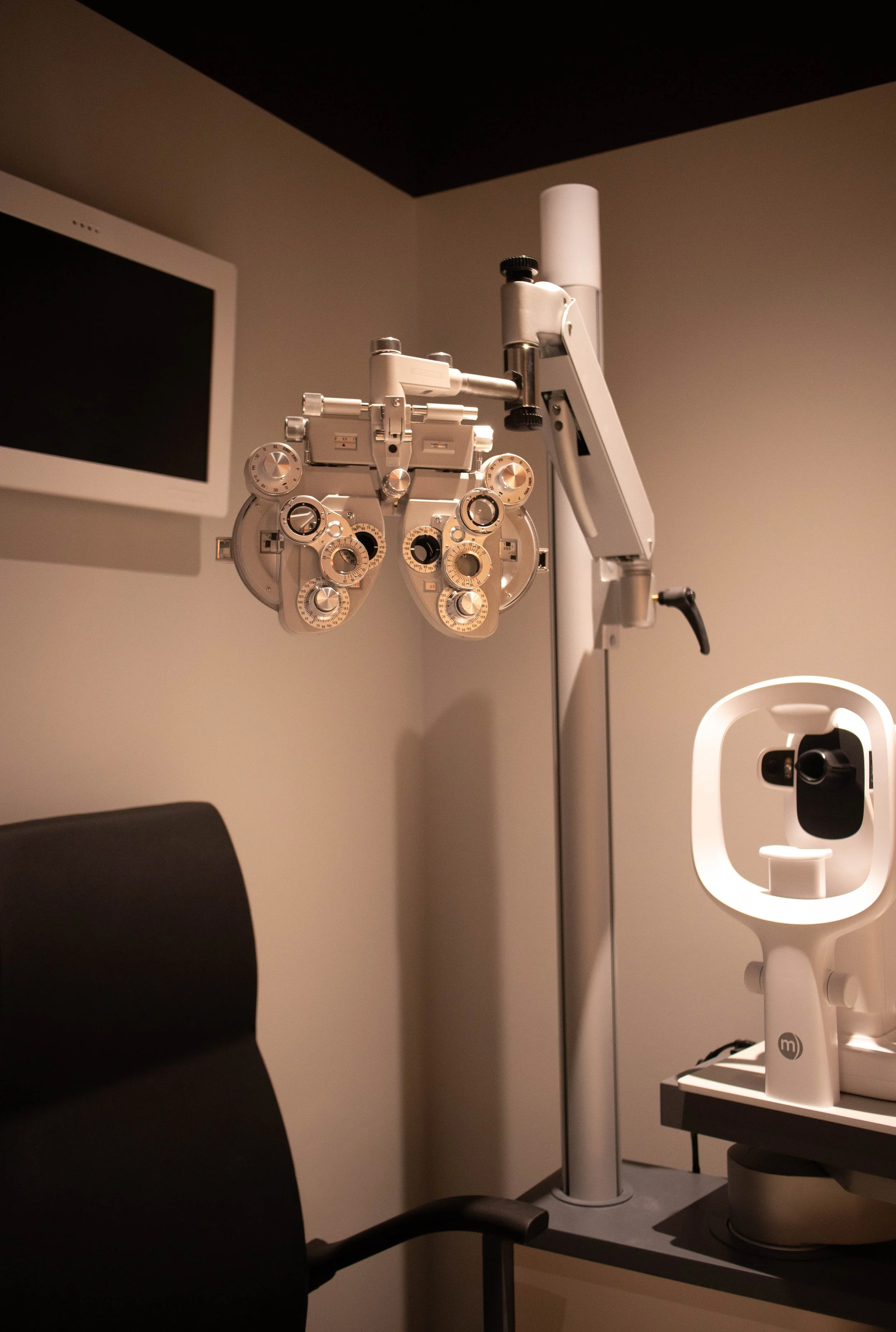
At Onèj Optometry, we are committed to examining your eyes thoroughly, explaining results clearly, and collaborating with your other health practitioners to ensure best management of your condition. A diabetic eye test will involve measurement of your vision and prescription, then the instillation of drops to dilate your pupils. Retinal scans such as OCT and ultrawide photography will ensure the best evaluation of your ocular health. You should allow an hour for this exam, and will not be able to drive home.
References:
Cite: Lundeen EA, Burke-Conte Z, Rein DB, et al. Prevalence of Diabetic Retinopathy in the US in 2021. JAMA Ophthalmol. 2023;141(8):747–754. doi:10.1001/jamaophthalmol.2023.2289. Link: https://jamanetwork.com/journals/jamaophthalmology/fullarticle/2806093
Cite: Zhang, M., Wu, J., Wang, Y., Wu, J., Hu, W., Jia, H., & Sun, X. (2023). Associations between blood pressure levels and diabetic retinopathy in patients with diabetes mellitus: A population-based study. Heliyon, 9(6). Link: https://www.cell.com/heliyon/fulltext/S2405-8440(23)04037-9?uuid=uuid%3Ad35f40fb-e46d-4f8e-965b-802ca7e97d81
Cite: Bryl, A., Mrugacz, M., Falkowski, M., & Zorena, K. (2022). The effect of hyperlipidemia on the course of diabetic retinopathy—literature review. Journal of clinical medicine, 11(10), 2761. Link: https://www.mdpi.com/2077-0383/11/10/2761
Cite: Lima, V. C., Cavalieri, G. C., Lima, M. C., Nazario, N. O., & Lima, G. C. (2016). Risk factors for diabetic retinopathy: a case–control study. International journal of retina and vitreous, 2(1), 21. Link to https://www.tandfonline.com/doi/full/10.1080/17446651.2022.2078305?scroll=top&needAccess=true#abstract
Cite: Vision Loss Expert Group of the Global Burden of Disease Study. (2024). Global estimates on the number of people blind or visually impaired by diabetic retinopathy: a meta-analysis from 2000 to 2020. Eye, 38(11), 2047. Link: https://pmc.ncbi.nlm.nih.gov/articles/PMC11269692/
Cite: Ghenciu, L. A., Hațegan, O. A., Bolintineanu, S. L., Dănilă, A. I., Faur, A. C., Prodan-Bărbulescu, C., ... & Șișu, A. M. (2024). Immune-Mediated Ocular Surface Disease in Diabetes Mellitus—Clinical Perspectives and Treatment: A Narrative Review. Biomedicines, 12(6), 1303. Link: https://www.mdpi.com/2227-9059/12/6/1303
Cite: Zhou, Q., Yang, L., Wang, Q., Li, Y., Wei, C., & Xie, L. (2022). Mechanistic investigations of diabetic ocular surface diseases. Frontiers in Endocrinology, 13, 1079541. Link; https://www.frontiersin.org/journals/endocrinology/articles/10.3389/fendo.2022.1079541/full
Cite: Luo, Y., Xia, Y., Gong, X. et al. GLP-1 receptor agonists in eye disease: a comprehensive review of current research and future potential. BMC Ophthalmol 26, 12 (2026). Link: https://link.springer.com/article/10.1186/s12886-025-04559-x
cite: Murray, M., Schifano, F., Chiappini, S., Corkery, J. M., & Guirguis, A. (2025). Potential eye disorders in people with and without Type 2 diabetes mellitus exposed to GLP-1 receptor agonists; an examination of the FAERS (FDA Adverse Event reporting System) database. American Journal of Ophthalmology. Link: https://www.sciencedirect.com/science/article/pii/S000293942500666X